Setting up a packaged drinking-water unit requires decisions across treatment technology, packaging capacity, factory layout, hygiene, utilities, quality control, and regulatory readiness. Because these elements are interdependent, choosing a capable Packaged Drinking Water Plant Manufacturer is a major project decision.
Buyers in Nagpur should evaluate manufacturers through technical evidence and scope clarity rather than equipment photographs or price alone.
Look for Application-Based Engineering
A credible manufacturer should begin by asking about the source water, planned packaging formats, daily output, working shifts, available space, and target market.
Be cautious if a complete system is recommended before these details are discussed. Even plants with the same hourly rating may require different pretreatment and packaging configurations.
The proposal should explain how the design was developed from:
- Water-analysis results
- Required product quality
- Bottle or jar sizes
- Expected production volume
- Available utilities
- Site dimensions
- Staffing level
- Expansion plans
Ask for a Complete Process Flow
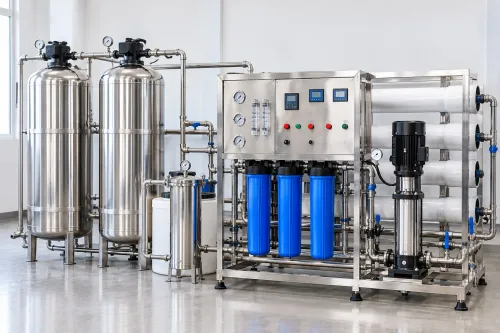
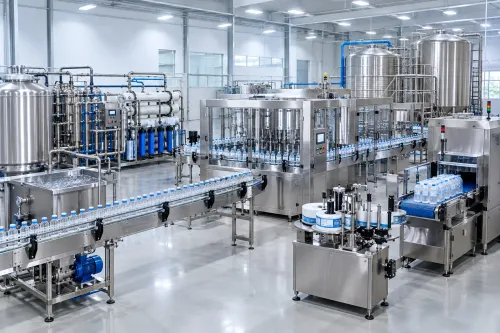
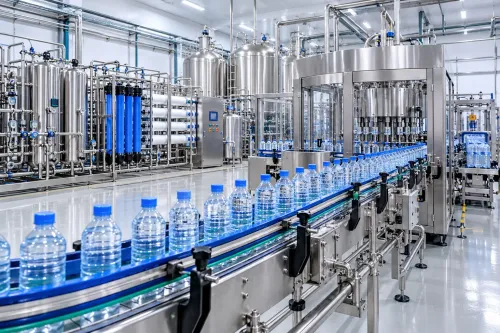
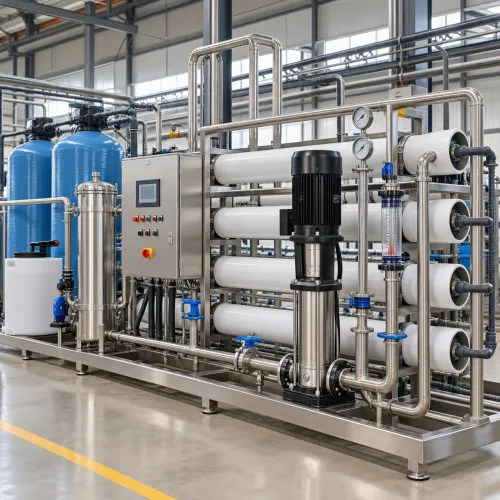
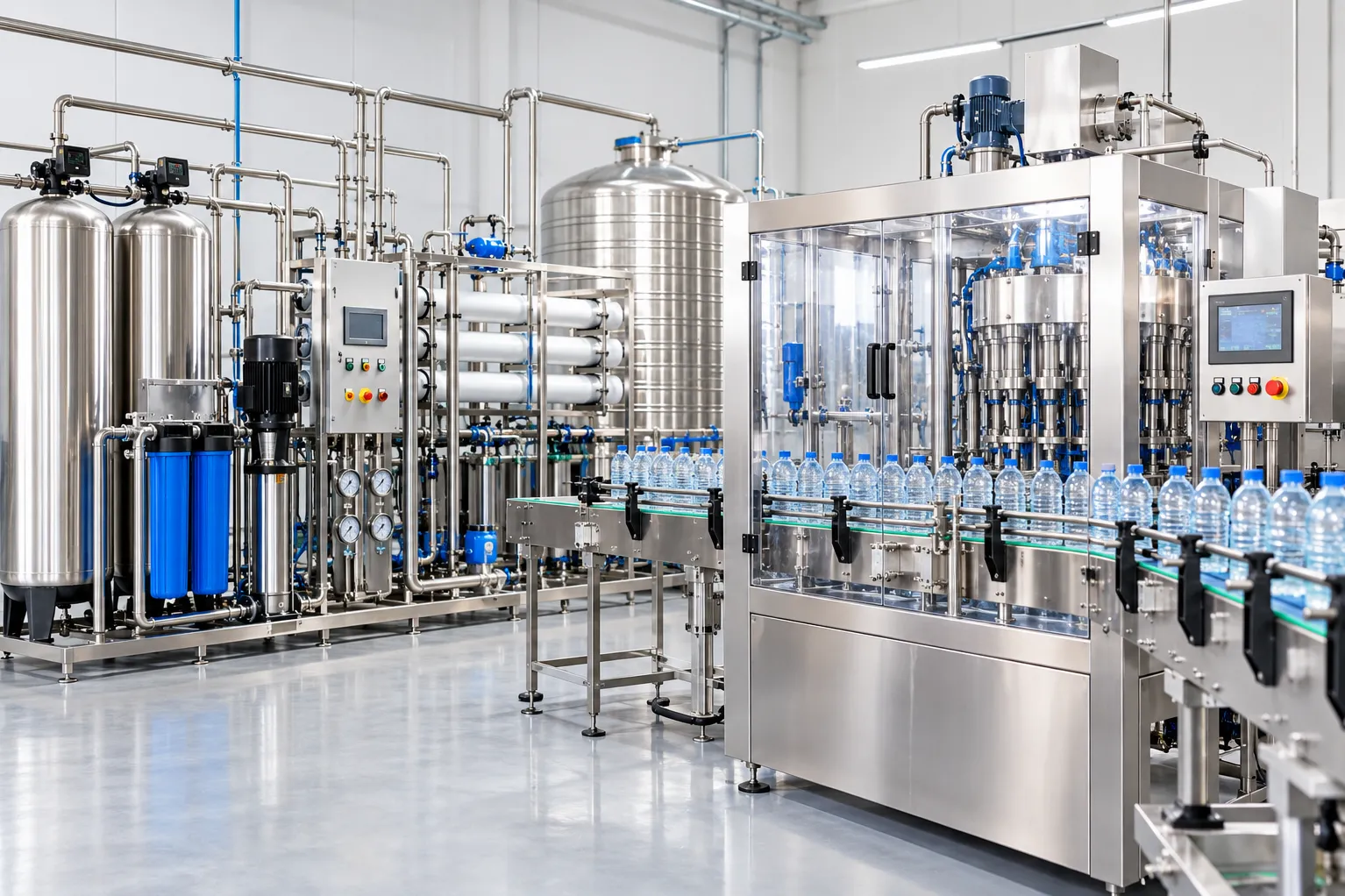
The supplier should provide a clear description of how water and containers move through the plant. This may cover raw-water storage, pretreatment, RO, disinfection, treated-water storage, container preparation, filling, capping, and final handling.
A process flow allows the buyer to identify omissions early. It also helps civil, electrical, plumbing, and production teams coordinate their responsibilities.
Review Product-Contact Construction
Materials used for treated-water storage, piping, and filling equipment should be appropriate for the intended application. The design should minimise unnecessary open handling and allow routine cleaning.
Buyers should inspect:
- Tank construction
- Internal surface accessibility
- Piping arrangement
- Filling nozzles
- Valve selection
- Dead-leg reduction
- Drainability
- Cleaning provisions
Hygienic construction supports operations, but it must be combined with documented sanitation and employee practices.
Compare Realistic Output
Ask whether the stated capacity represents water-treatment output, filler speed, or complete-line production. Practical output may be affected by container washing, changeovers, manual handling, labelling, packing, and maintenance.
For multiple package sizes, confirm the change parts, time required for changeover, and output achievable with each format.
Clarify Site and Utility Requirements
Before ordering, obtain details of:
- Connected electrical load
- Compressed-air requirement
- Raw-water demand
- Drainage volume
- Floor-space requirement
- Tank loads
- Ventilation
- Operator access
- Finished-goods storage
This information is essential for selecting or modifying a site in Nagpur.
Evaluate Documentation and Training
The plant team will need operating procedures, maintenance schedules, equipment manuals, and quality-control records. Procurement managers should confirm whether the manufacturer provides installation supervision, commissioning, and operator instruction.
It is also important to understand the project owner’s responsibility for approvals, testing, certification, labelling, and ongoing compliance. Machinery supply alone does not make a facility ready for commercial production.
Confirm After-Sales Support
Orenus Water Age Technology supplies water-treatment and plant equipment for project owners in Nagpur. During evaluation, buyers should discuss response procedures, service availability, consumables, replacement components, and preventive maintenance.
A manufacturer is ready for serious consideration when its proposal defines system performance, boundaries of supply, utility needs, implementation responsibilities, and support conditions in writing. This level of clarity helps buyers compare the total project rather than only the visible machinery.
Keywords