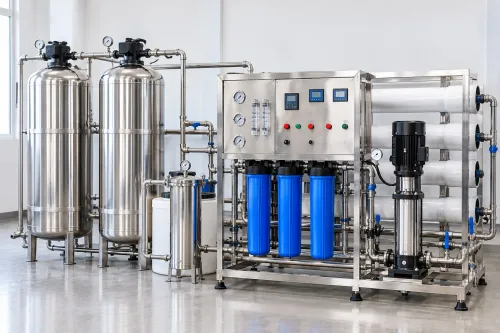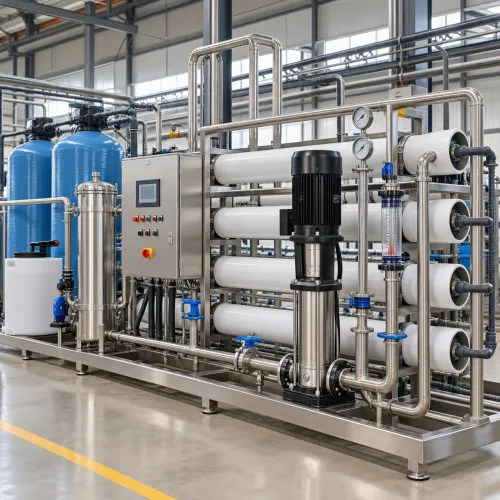

Managing several contractors for treatment equipment, tanks, piping, electrical integration, installation, and commissioning can create coordination problems. A Water Treatment Turnkey Project brings these connected activities under a more unified implementation structure.
For industrial and commercial organisations in Nagpur, a turnkey approach can simplify responsibility, but only when the project scope and performance requirements are defined precisely.
Establish the Design Basis
The project should begin with documented operating requirements. These become the technical foundation for equipment selection and performance assessment.
The design basis normally covers:
- Source-water analysis
- Required treated-water quality
- Average and peak flow
- Daily operating hours
- Storage capacity
- Intended application
- Available utilities
- Site limitations
- Wastewater handling
- Future expansion
If any of these inputs remain uncertain, the project should identify the assumptions being used.
Complete a Site Survey
A site survey helps determine whether the proposed system can be installed, accessed, operated, and serviced safely.
The survey should examine:
- Available floor area
- Equipment-entry route
- Foundation conditions
- Drainage points
- Electrical supply
- Raw-water connection
- Treated-water destination
- Ventilation
- Chemical-storage space
- Maintenance clearances
On existing industrial sites, the survey should also consider production activity and how installation work will be coordinated without unnecessary disruption.
Finalise Process Engineering
Based on the source water and output requirements, the provider develops the treatment sequence. It may include filtration, softening, dosing, reverse osmosis, demineralisation, disinfection, or specialised polishing.
At this stage, buyers should review process-flow diagrams, equipment capacities, tank sizes, instrument locations, and expected recovery. The project team should also identify reject water, backwash water, and regeneration waste.
Define the Scope Boundary
The word “turnkey” can mean different things to different suppliers. A written scope should state who is responsible for:
- Equipment manufacturing
- Tanks and vessels
- Interconnecting piping
- Cabling
- Civil foundations
- Drainage
- Utility connections
- Installation
- Commissioning
- Performance testing
- Documentation
- Operator training
Clear boundaries prevent disputes and last-minute additions.
Coordinate Manufacturing and Site Readiness
Equipment production and site preparation should progress against an agreed schedule. Delays often occur when machinery arrives before foundations, power, water, or drainage are ready.
A project coordinator should track drawings, approvals, fabrication, civil work, dispatch, installation, and commissioning dependencies. Any design change should be recorded so that procurement and site teams work from the same information.
Test Before Handover
Commissioning should verify more than whether pumps start. It should confirm flow, pressure, treated-water quality, control logic, alarms, leakage, and operating stability.
Performance testing may include:
- Feed-water verification
- Individual equipment checks
- Trial operation
- Instrument calibration
- Output-quality testing
- Capacity verification
- Operator demonstration
- Documentation handover
Orenus Water Age Technology undertakes water-treatment project planning for industrial and commercial requirements in Nagpur. A structured turnkey process helps connect design decisions with installation realities and operating responsibilities.
The best readiness indicator is documentation. When the design basis, scope, schedule, testing method, and handover requirements are clear before execution, the project is more likely to reach commissioning without unresolved technical gaps.
Keywords